


Texas heads into the bye week at 4-0, and the margin for experimenting is about to get a lot smaller. With nonconference play finished, Steve Sarkisian and his staff have a clear picture of what they have on the 2026 roster — but a few players have shown they deserve a larger role as SEC play ramps up.
Young Longhorns Making a Case
The bye week is a chance for Texas to evaluate everything from the first four games before the schedule turns more demanding. There will be fewer chances to get young players meaningful snaps in what could be tight conference games, but that does not mean those players cannot help immediately.
A handful of Longhorns have taken advantage of their opportunities. Others entered the season in position battles and have started to separate themselves.
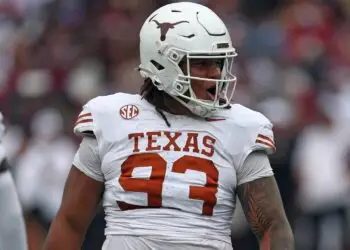
Lance Jackson has emerged as Texas’ No. 2 pass rusher
One of the biggest questions entering the season was simple: Who could consistently pressure the quarterback besides Colin Simmons?
Simmons is going to command attention every week. If Texas does not have another edge rusher capable of winning one-on-one matchups, opponents can tilt protection toward Simmons, double-team him and force someone else to prove they can get home.
The competition appeared to center on Zina Umeozulu and Lance Jackson. Umeozulu has not done anything to lose confidence in his ability, and he has looked good when he has been on the field. But through four games, Jackson has made the stronger case.
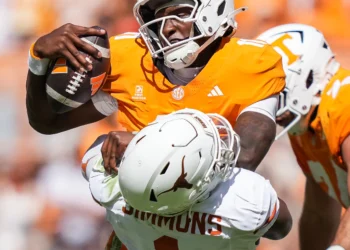
Against Tennessee, Jackson delivered his best performance as a Longhorn. He recorded nine pressures, four quarterback hits and a sack, repeatedly creating problems for the Volunteers’ offensive line. The production mattered, but so did the way he affected the game. Jackson showed that an offense cannot simply sell out to slow Simmons and expect Texas’ pass rush to disappear.
If opponents devote extra bodies to Simmons, Jackson has proven he can capitalize. And if Jackson starts receiving more attention himself, that should create cleaner opportunities for Simmons. Either way, Texas becomes much tougher to block when both players are consistently affecting the quarterback.
Jermaine Bishop needs more snaps
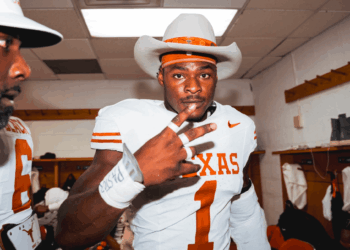
Freshman wide receiver Jermaine Bishop arrived at Texas as a highly regarded recruit after a record-setting high school career. The question was never whether he had talent. The question was whether he could be ready quickly enough to contribute for a team with championship expectations.
Four games into the season, Bishop has shown he is ready.
He made an early impact against Ohio State, drawing a key pass-interference penalty on Texas’ opening touchdown drive. He followed that against Tennessee with a 30-yard reception that moved the Longhorns into the red zone.
Bishop also flashed on special teams. On a trick return with two Longhorns deep, he broke loose for what would have been a 30-yard return before the play was wiped out because Ryan Niblett signaled for a fair catch.
The return did not count, but the larger point remains: Bishop finds a way to make something happen when he is involved. Whether it is on offense or special teams, he has shown the instincts and playmaking ability of a natural football player. Texas should continue finding ways to get him on the field.
Graceson Littleton is quietly one of Texas’ best players
Graceson Littleton does not play a position that always brings a lot of attention, but he has been one of the more consistently productive players on Texas’ defense since arriving on campus.
Littleton was tested immediately as a freshman last season when he matched up with Ohio State star Jeremiah Smith. He held his own in that matchup, and he has continued to show why opponents are often reluctant to target him.
Smith had another opportunity against Littleton this season, and Littleton again came up with a major play by preventing a touchdown. Tennessee tried to challenge him as well, with little success.
Through four games, Littleton leads Texas with three passes defended and is the only defensive back on the roster with an interception. He has also been effective near the line of scrimmage, whether he is fitting against the run, attacking downhill or blitzing off the edge.
That versatility could lead defensive coordinator Will Muschamp to expand Littleton’s responsibilities beyond his starting nickel role as the season moves forward. Texas will need as many disruptive defenders as possible against the quarterbacks remaining on the schedule, including Trinidad Chambliss, Kamario Taylor and others capable of creating problems with their arms and legs.
The opportunities may become more limited from here, but Jackson, Bishop and Littleton have each made a strong case that their roles should grow.