



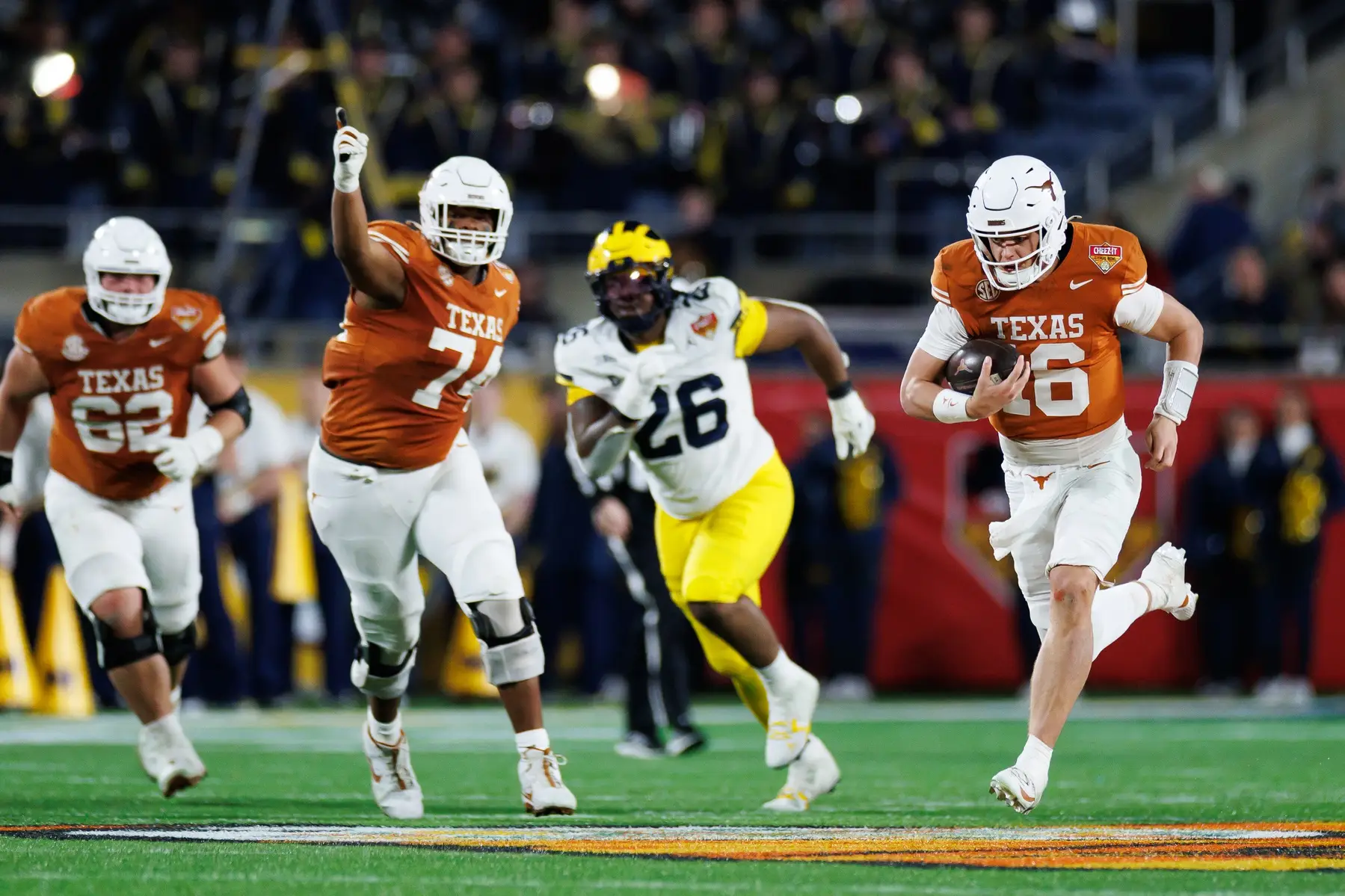
The Texas Longhorns are, by all metrics, a successful collegiate franchise. Not only have they historically served as a significant pipeline into the NFL, but they ended their last season with an impressive 10–3 record.
Right now, most sports fans are focused more on horse racing than they are on college football. Many are researching how to bet on the Kentucky Derby. We thought it would be fun to take a look at what the Longhorns could learn from horse racing training programs.
Consider Long Trajectories
Horse management is a much lengthier process than many fans realize. Often, it begins prior to birth through breeding programs that are designed to bring out the best in the genetics of two established horses with high levels of pedigree. It’s for this reason that six-figure sums can be spent just on breeding a championship-level thoroughbred.
Naturally, we’re not recommending that the Longhorns start developing a player breeding program, but they can certainly benefit from long-tail player development cycles. This is already a key focus for many of the most successful collegiate football programs in the country. They start scouring the country for talented players, sometimes even looking at distinguished athletes before they’ve reached high school through national competitive programs.
There is an increasingly big emphasis on searching for talent in historically untapped markets. In the college football sense, this can refer to smaller communities that don’t always get the attention of national recruiters. It could also mean looking to Europe, Asia, or Australia for talented international players. The key is to focus not just on what will make the program great today, but what will secure its future for many years to come.
It’s through these long-tail considerations that you create dynasty programs. Fortunately, the Longhorns have a strong brand that naturally attracts high-level talent from all over the world, which makes recruitment significantly easier.
Selective Debuts
Horse management teams have to be very careful about where they showcase their horses. It is important to get reps in, particularly before big events like the Kentucky Derby, but where these take place can be extremely impactful. Part of the reason for this is that going to an event is itself at least somewhat traumatic for the animal, which often has to be sedated just to endure transport. There’s always the risk of injury or illness as horses are moved from one event to another. Teams also want to produce strong showings from their animal, so they are very careful about the events they select.
The Longhorns can’t choose their schedule the way a horse management team can, but they are able to selectively utilize their talent. Often, even very promising freshmen will redshirt for their first year or play only very selectively. This is done, again, as a way of developing the talent pipeline, ensuring that newer, less experienced players can get reps in a controlled environment without significantly risking the team’s overall record.
Careful Health Monitoring
Horses are kept safe through a wide variety of health monitoring technologies that allow their management teams to spot problems before they become significant. Wearable tracking devices can now monitor even very subtle changes to the animal’s gait. This is important both for keeping the animal race-ready and for ensuring that it can have a happy, healthy life after retirement. Prior to the innovation of wearables, it was tragically common for racehorses to have vastly shortened life expectancies. Wearables are slowly changing this.
In the context of football, wearables serve a similar function. We now know through many studies that football and other high-contact sports can create subtle but long-term injuries that result in very serious side effects. Wearables help identify these risk factors and adjust training and playtime accordingly.
It’s worth noting that this technology is really still in its infancy. IoT devices themselves are less than 20 years old, with wide adoption being an even more recent phenomenon. Big data is comparably recent, and the ability to process it at a high level is changing all the time. AI powered data processing tools now make it easier than ever to take in large quantities of information, and rapidly draw insights from it.
These developments will likely only further improve the Long Horns’ ability to produce valuable insights into player health.
Looking Ahead For The Longhorns
Naturally, the Longhorns, with their tremendous historical record, probably aren’t looking to us for advice. Nevertheless, it is fair to say that there’s a lot of wisdom to be had in modern horse management practices.
It’s not just about how to take care of a racehorse. It’s about how to manage and shape athletic performance in a way that is conducive both to long-term results and short-term victories.
![Everything you need to know about the Oklahoma Sooners football team [VIDEO]](https://hornsports.com/wp-content/uploads//2023/10/bvUSATSI_11258509_168380999_lowres.jpg.683ae43b6bee93376423f9df377fb4e5-350x250.jpg)



![Everything you need to know about the Oklahoma Sooners football team [VIDEO]](https://hornsports.com/wp-content/uploads//2023/10/bvUSATSI_11258509_168380999_lowres.jpg.683ae43b6bee93376423f9df377fb4e5-120x86.jpg)