

Welcome to the HornSports Forum
By registering with us, you'll be able to discuss, share and private message with other members of our Texas Longhorns message board community.
SignUp Now!You are using an out of date browser. It may not display this or other websites correctly.
You should upgrade or use an alternative browser.
You should upgrade or use an alternative browser.
Landscape Thread - The August "To Do" List
- Thread starter Sirhornsalot
- Start date
betogonzalez
Veteran
- Joined
- Dec 21, 2012
- Messages
- 157
Mark,You can spray the crabgrass with a product like Celsius WG. It kills crabgrass and is what we use to accomplish that. You would need to mix in a surfactant like Surfac 820 to make the chemical stick to the blades (waterproof it) for a more thorough kill.
Celsius will not kill St Augustine. You would want to spray when it's not 100 though. Mornings or evenings are best times to do it. Spraying when its that hot will cause the turf grass to burn some.
Pre-emergent is a product that sterilizes the soil so that weed seeds from weeds like crabgrass cannot germinate and reproduce. We apply this granular three times a year (Feb, Aug, Nov) so that we can have it down prior to the germination periods. This does indeed help to curtail future crabgrass in your lawn.
I'm attaching a link for the Celsius. It's rather expensive which is why most doityourselfers will stop and call a landscaper to do this instead.
http://www.domyownpestcontrol.com/celsius-wg-herbicide-p-1923.html
THANKS for the info. I will let you know how it turns out.
Beto

Sirhornsalot
**The Official Horn Sports Landscaper and Landscap
- Joined
- Nov 6, 2013
- Messages
- 33,307
Simms, the below link is for the product I recommend you get for St Augustine/Zoysia. You will not find this at Lowes/Home Depot. Lowes/HD will try to sell you Scott's Bonus S, a product that I do not endorse.For St Augustine/Zoysia, you’re looking for about a 15-17>
Mark, what could I purchase at Lowes/Home Depot that has this blend?
http://www.fertilome.com/product.aspx?pid=efc1582f-275b-4955-b30c-cf9b60d3f554
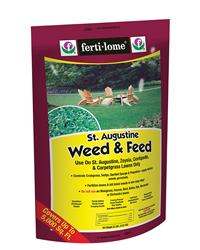
In the top right corner of the Home Page (see below link), you will find a Garden Center Locator where you just plug in your zip code and it shows you the retailers near you that sell their products.
http://www.fertilome.com
Where are you located? If you're in Dallas/Ft Worth or Austin, I can sell you these products and have them delivered to your door step. I've also shipped products to Longhorns in Houston and San Antonio.
Let me know if I can help. Email me at greenthumbtx@verizon.net

doc longhorn
V.I.P.
- Joined
- Nov 13, 2013
- Messages
- 2,985
Mark - I have 3 or 4 large pots planted with Canyon Creek Abelia. All are doing well with the exception of one. It acts like it is not getting enough water, even though I know it is. It is spindly and losing leaves around the bottom of the bush.
I'm clueless - my Saltillo, Mexico yard men (yes, they have their green cards) are more clueless than me. The plant is not near my swimming pool, so I know that is not affecting it. It does sit near a water feature, with a fountain, but so does another one that is doing well.
Any ideas?
I'm clueless - my Saltillo, Mexico yard men (yes, they have their green cards) are more clueless than me. The plant is not near my swimming pool, so I know that is not affecting it. It does sit near a water feature, with a fountain, but so does another one that is doing well.
Any ideas?
Sirhornsalot
**The Official Horn Sports Landscaper and Landscap
- Joined
- Nov 6, 2013
- Messages
- 33,307
Mark - I have 3 or 4 large pots planted with Canyon Creek Abelia. All are doing well with the exception of one. It acts like it is not getting enough water, even though I know it is. It is spindly and losing leaves around the bottom of the bush.
I'm clueless - my Saltillo, Mexico yard men (yes, they have their green cards) are more clueless than me. The plant is not near my swimming pool, so I know that is not affecting it. It does sit near a water feature, with a fountain, but so does another one that is doing well.
Any ideas?
How long have they been in pots? It could be that they're root bound and need a larger space, or at least one of them has arrived at that point?
Another possibility could be that a fungus is in play. A systemic fungicide would take care of that.
Abelias really don't suffer from pests unless there are some grubs in the pot eating at the roots.
Abelias don't need a lot of water and would suffer if given too much water. So I would agree, it's not a water thing.
A fungus could be in play with one plant and not another for a variety of reasons. If you have predominate SW winds and one plant sits on the NW side of a water feature, it will naturally remain moist, longer, than the other. That's just an example.
Hi Mark
I live south of Longview and my yard is approx. 1/3 acre. We have an aerobic sewer system. My soil has NO clay- all sand. I had to haul numerous loads of clay mix to prepare the house pad area. Retaining water within the soil is a problem. In the areas where the four main sewer sprinkler heads are, the water appears to leach all nutrients from the soil. Although I fertilize 3 times a year the St. Augustine never really greens much in the sprinkler areas. I have tried to add extra fertilizer in these areas with only limited, if any success. Is there some type of soil amendment I can add? I have asked my aerobic system service company and they have very little if any helpful info. I know some of the golf courses in this area add a bagged composted mixture every spring to their greens. The product they use is purchased from the Houston area- but I am uncertain what exactly it is and whether it would benefit my lawn.
Any thoughts you can share will be greatly appreciated.
I live south of Longview and my yard is approx. 1/3 acre. We have an aerobic sewer system. My soil has NO clay- all sand. I had to haul numerous loads of clay mix to prepare the house pad area. Retaining water within the soil is a problem. In the areas where the four main sewer sprinkler heads are, the water appears to leach all nutrients from the soil. Although I fertilize 3 times a year the St. Augustine never really greens much in the sprinkler areas. I have tried to add extra fertilizer in these areas with only limited, if any success. Is there some type of soil amendment I can add? I have asked my aerobic system service company and they have very little if any helpful info. I know some of the golf courses in this area add a bagged composted mixture every spring to their greens. The product they use is purchased from the Houston area- but I am uncertain what exactly it is and whether it would benefit my lawn.
Any thoughts you can share will be greatly appreciated.
Last edited by a moderator:

simmsan43
Rookie
- Joined
- Nov 13, 2013
- Messages
- 10
Mark,
Thanks for the repy. I put out that weed and feed in the spring. So I need to put it out again this summer? Will this be the last of the fertilizing this year? I have some berrmuda grass mixed in with my St Augustine. Will this be an issue? I didn't see any effects this spring when I put it out. Thanks.
Thanks for the repy. I put out that weed and feed in the spring. So I need to put it out again this summer? Will this be the last of the fertilizing this year? I have some berrmuda grass mixed in with my St Augustine. Will this be an issue? I didn't see any effects this spring when I put it out. Thanks.
Sirhornsalot
**The Official Horn Sports Landscaper and Landscap
- Joined
- Nov 6, 2013
- Messages
- 33,307
Hi Mark
I live south of Longview and my yard is approx. 1/3 acre. We have an aerobic sewer system. My soil has NO clay- all sand. I had to haul numerous loads of clay mix to prepare the house pad area. Retaining water within the soil is a problem. In the areas where the four main sewer sprinkler heads are, the water appears to leach all nutrients from the soil. Although I fertilize 3 times a year the St. Augustine never really greens much in the sprinkler areas. I have tried to add extra fertilizer in these areas with only limited, if any success. Is there some type of soil amendment I can add? I have asked my aerobic system service company and they have very little if any helpful info. I know some of the golf courses in this area add a bagged composted mixture every spring to their greens. The product they use is purchased from the Houston area- but I am uncertain what exactly it is and whether it would benefit my lawn.
Any thoughts you can share will be greatly appreciated.
Hey GMCC, good to hear from you. I actually have a customer in Longview that we service, so I'm used to dealing with all that sand.
I also grew up just north of Longview.
There are two things I can see being helpful to your situation. One - apply a topdressing to your lawn every January (late in the month). This will sink into the soil about the time your turf begins emerging from dormancy a month or so later. We use Dairy Cow Manure Compost with our topdressings because of the high nutrition diet dairy cows are given. That compost is also "powdery" so it sinks into the turf much faster than other types of compost.
Over time, this will make your soil more retentive with water.
You could also do a topsoil topdressing during late fall. You would want to use a clay-based topsoil, not a sandy loam type.
Secondly, you should consider applying "Hydretain" to your lawn during the month of June. This product is applied. You water it in. It sinks into the turf, attaches to the roots of your turf and creates a water bubblet. This bubblet will expand and contract according to your watering and/or rainfall. It delivers water on demand to the plant (grass).
The end result is being able to use 1/3 less water while producing a healthier turf. The water in the bubblet is oxygenated as it passes to the plant. So you're effectively getting the "rainfall effect."
Each treatment will last three months, so a June application carries your lawn through June-July-August, the hottest months of the year. It can be applied at any time during the year though.
www.hydretain.com
We sell and apply Hydretain. The website only offers the liquid version, but we also sell the granular version. Our dairy cow manure compost comes from Soil Building Systems in Dallas.
Last edited by a moderator:
Sirhornsalot
**The Official Horn Sports Landscaper and Landscap
- Joined
- Nov 6, 2013
- Messages
- 33,307
Mark,
Thanks for the repy. I put out that weed and feed in the spring. So I need to put it out again this summer? Will this be the last of the fertilizing this year? I have some berrmuda grass mixed in with my St Augustine. Will this be an issue? I didn't see any effects this spring when I put it out. Thanks.
If your lawn is weed-free, you could go with a straight fertilizer instead. I REALLY like the way St Augustine performs with Triple 18 Hydromulch fertilizer. However, the Fertilome is a pretty decent nitrogen feed, too.
Your scheduled fertilizations should be three times a year, taking place in early April, mid to late June, and again in late August or early Sept.
There will be another round of pre emergent to apply in mid-November, FYI, in addition to this month.
Bermuda is amazingly resilient. So although it hates the atrazine in a St Augustine weed/feed, it can and usually does sail right through it. St Augustine, however, does not do so well with Bermuda weed/feeds.

Topstarr
V.I.P.
- Joined
- Oct 22, 2013
- Messages
- 2,868
Home Depot has lesco at 15-5-10 and works great on St Aug.I do not use Scott any more. Lesco is the best I have found.Simms, the below link is for the product I recommend you get for St Augustine/Zoysia. You will not find this at Lowes/Home Depot. Lowes/HD will try to sell you Scott's Bonus S, a product that I do not endorse.
http://www.fertilome.com/product.aspx?pid=efc1582f-275b-4955-b30c-cf9b60d3f554
In the top right corner of the Home Page (see below link), you will find a Garden Center Locator where you just plug in your zip code and it shows you the retailers near you that sell their products.
http://www.fertilome.com
Where are you located? If you're in Dallas/Ft Worth or Austin, I can sell you these products and have them delivered to your door step. I've also shipped products to Longhorns in Houston and San Antonio.
Let me know if I can help. Email me at greenthumbtx@verizon.net
Sirhornsalot
**The Official Horn Sports Landscaper and Landscap
- Joined
- Nov 6, 2013
- Messages
- 33,307
Lesco's stuff is made about two miles from me. It's a nice product but there's a reason I go to either 1) Triple 18 Hydromulch, or 2) Fertilome instead.
Scott's Bonus S has a very low grade of atrazine and is a terrible product for St Augustine, IMO.
Scott's Bonus S has a very low grade of atrazine and is a terrible product for St Augustine, IMO.
Sirhornsalot
**The Official Horn Sports Landscaper and Landscap
- Joined
- Nov 6, 2013
- Messages
- 33,307
This probably deserves it's own thread. Everyone is interested in what winter weather may come our way, or should be  .
.
The 2014 Farmers Almanac has released it's forecast for the coming year. While many are quick to criticize "the weather man" on the news and weather channel, the FA runs at about 80% accuracy, which is pretty good considering how far out they're forecasting.
Fall - fall arrives early this year and is cooler than normal. Precipitation will be normal.
Winter - again, arrives early and is much colder than normal. Above average precipitation.
Texas - will be hit by a hurricane in early spring.
http://farmersalmanac.com/weather/2014/08/24/2015-us-winter-forecast/

After the frigid, bitterly cold, and snow-filled winter last year, many of you are wondering just what this winter might bring. Could it possibly be as bad as last?
According to the 2015 edition of the Farmers’ Almanac, the winter of 2014–15 will see below-normal temperatures for about three-quarters of the nation. A large zone of very cold temperatures will be found from east of the Continental Divide east to the Appalachians. The most frigid temperatures will be found from the Northern Plains into the Great Lakes. The coldest outbreak of the season will come during the final week of January into the beginning of February, when frigid arctic air drops temperatures across the Northern Plains to perhaps 40 below zero. As the frigid air blows across the Great Lakes, snow showers and squalls will drop heavy amounts of snow to the lee of the Lakes.
No region will see prolonged spells of above-normal temperatures; only near the West and East Coasts will temperatures average close to normal.
Over the eastern third of the country, we are expecting an active storm track with a number of storms delivering copious amounts of snow and rain. Near-normal precipitation is expected for the Pacific Northwest, the Southwest States, and Northern Plains, while below-normal precipitation values are forecast for the Southwest States as well as the Upper Midwest and the Great Lakes. The Central and Southern Plains are expected to receive above-average precipitation.
We are “red flagging†the first 10 days of January and the first week of February along the Atlantic Seaboard for active wintry weather featuring bouts of heavy precipitation and strong winds. Another red flag timeframe for widespread wintry conditions is the middle part of March from the nation’s midsection to the East Coast.
Potential El Niño is an Uncertain Element
As we were putting the finishing touches on this year’s long-range projections, the National Oceanic Atmospheric and Administration issued an official El Niño watch. An El Niño is a warming of the central Pacific once every few years, from a combination of wind and waves in the tropics. It shakes up climate around the world, changing rain and temperature patterns. An El Niño could result in more rain this winter for drought-stricken California and Southern States, and a milder winter for the nation’s frigid northern tier. El Niños are usually strongest from December to April, but there’s no guarantee that we will see one this winter. We’ll just have to wait and see, but in the mean time, all of us at the Farmers’ Almanac suggest you stock up on firewood, sweaters, and hot cocoa. It certainly looks like another long winter of shivery and shovelry is on tap.
. The 2014 Farmers Almanac has released it's forecast for the coming year. While many are quick to criticize "the weather man" on the news and weather channel, the FA runs at about 80% accuracy, which is pretty good considering how far out they're forecasting.
Fall - fall arrives early this year and is cooler than normal. Precipitation will be normal.
Winter - again, arrives early and is much colder than normal. Above average precipitation.
Texas - will be hit by a hurricane in early spring.
http://farmersalmanac.com/weather/2014/08/24/2015-us-winter-forecast/
After the frigid, bitterly cold, and snow-filled winter last year, many of you are wondering just what this winter might bring. Could it possibly be as bad as last?
According to the 2015 edition of the Farmers’ Almanac, the winter of 2014–15 will see below-normal temperatures for about three-quarters of the nation. A large zone of very cold temperatures will be found from east of the Continental Divide east to the Appalachians. The most frigid temperatures will be found from the Northern Plains into the Great Lakes. The coldest outbreak of the season will come during the final week of January into the beginning of February, when frigid arctic air drops temperatures across the Northern Plains to perhaps 40 below zero. As the frigid air blows across the Great Lakes, snow showers and squalls will drop heavy amounts of snow to the lee of the Lakes.
No region will see prolonged spells of above-normal temperatures; only near the West and East Coasts will temperatures average close to normal.
Over the eastern third of the country, we are expecting an active storm track with a number of storms delivering copious amounts of snow and rain. Near-normal precipitation is expected for the Pacific Northwest, the Southwest States, and Northern Plains, while below-normal precipitation values are forecast for the Southwest States as well as the Upper Midwest and the Great Lakes. The Central and Southern Plains are expected to receive above-average precipitation.
We are “red flagging†the first 10 days of January and the first week of February along the Atlantic Seaboard for active wintry weather featuring bouts of heavy precipitation and strong winds. Another red flag timeframe for widespread wintry conditions is the middle part of March from the nation’s midsection to the East Coast.
Potential El Niño is an Uncertain Element
As we were putting the finishing touches on this year’s long-range projections, the National Oceanic Atmospheric and Administration issued an official El Niño watch. An El Niño is a warming of the central Pacific once every few years, from a combination of wind and waves in the tropics. It shakes up climate around the world, changing rain and temperature patterns. An El Niño could result in more rain this winter for drought-stricken California and Southern States, and a milder winter for the nation’s frigid northern tier. El Niños are usually strongest from December to April, but there’s no guarantee that we will see one this winter. We’ll just have to wait and see, but in the mean time, all of us at the Farmers’ Almanac suggest you stock up on firewood, sweaters, and hot cocoa. It certainly looks like another long winter of shivery and shovelry is on tap.


About Us
