Welcome to the HornSports Forum

By registering with us, you'll be able to discuss, share and private message with other members of our Texas Longhorns message board community.

SignUp Now!

July Landscape Thread - Water savers!

I had the last cedar in my yard cut down today.  Told the guys it was fine just to cut it off ay ground level.  My wife heard the cedar roots will keep sucking water if you don't pour something on the base of the tree.

Do you have any clue if this is a fact?  I'm thinking gasoline or salt water.

For a short period of time, yes. But we're talking weeks. It takes a few weeks for the roots to die.

Drill a hole into the stump, fill with epsom salts. It will suck the moisture out of the stump and roots. If the stump is large, drill multiple holes.

 
Mark, thanks for the info.  In retrospect, the turf started to fade prior to the heat of summer.  Also, I don't have an inground sprinkler system, just the dude moving a hose around the yard program.  My front yard is not sizable, and the areas in question are in prime locations to receive plenty of water with my sprinkler placement.  Maybe need to test more areas for cinch bugs?  I'm guessing I need to check more areas where the grass is actually doing well to see if the bugs surface in the can?  I am realizing I really only ran the test on/near the dead areas, which now seems inadequate.  I will check again and then irritate you further with more amateur lawn care maneuvers on my part!  As my trees get larger in the front yard, they will provide more shade to these areas in theory and decrease the punishing sun I hope.  Either way, thanks for being my sounding board.  I will investigate further and attempt to solve this mystery. 

Did you treat for grubs in May? If not, then that's probably your culprit. They'll tear a lawn up and are still feeding on St Augustine roots right now.

 
Did you treat for grubs in May? If not, then that's probably your culprit. They'll tear a lawn up and are still feeding on St Augustine roots right now.
As the lawn care novice that I am you will have to tolerate my ignorance. I treat with the weed/feed in the spring, but I expect that doesn't treat grubs? What should I be using, and am I able to treat for grubs right now without damaging the grass that is looking good? I feel like I should owe you a retainer or something for all of your time! You are much appreciated my friend. I am a physical therapist, let me know if you ever need any professional input from my brain!

 
Mike, I've been doing this for years. You owe me nothing. I'm glad to help.

Where are you located? I can sell you the grub killer you need. I have a combo that kills both grubs and chinch bugs. Let me know, I can either have it dropped off to you or even mail it to you. Stuff has an 8-month residual and kills a host of other insects in the lawn. You can't get this on the retail market.

greenthumbtx@verizon.net

With a St Augustine lawn (and bermuda to a lesser extent), you simply have to plan on treating grub worms each May/June. They feed on the roots of the turf grass, weakening it slowly to the point of destruction. Damage is sporadic and random. There's no way to prevent their presence so we simply treat them as an annual pest that must be dealt with.

 
Last edited by a moderator:
Mike, I've been doing this for years. You owe me nothing. I'm glad to help.

Where are you located? I can sell you the grub killer you need. I have a combo that kills both grubs and chinch bugs. Let me know, I can either have it dropped off to you or even mail it to you. Stuff has an 8-month residual and kills a host of other insects in the lawn. You can't get this on the retail market.

greenthumbtx@verizon.net

With a St Augustine lawn (and bermuda to a lesser extent), you simply have to plan on treating grub worms each May/June. They feed on the roots of the turf grass, weakening it slowly to the point of destruction. Damage is sporadic and random. There's no way to prevent their presence so we simply treat them as an annual pest that must be dealt with.
Thanks for the reply. I got anxious and purchased a Spectracide product at Lowes and applied yesterday. It appears to cover every bug from Godzilla to grubs, but not harvester or pharaoh ants! Maybe not as good as your product, but already in place and watered in. I am located in Leander for future reference, thanks again for your time.

 
Thanks for the reply. I got anxious and purchased a Spectracide product at Lowes and applied yesterday. It appears to cover every bug from Godzilla to grubs, but not harvester or pharaoh ants! Maybe not as good as your product, but already in place and watered in. I am located in Leander for future reference, thanks again for your time.

I'll be in Leander Wednesday if you need anything from me. FYI.

greenthumbtx@verizon.net

 
SHA, I always wondered how field keepers can make dark green and light green patterns on the turf.  How do they do that?
eaglestx-10.jpg


Shan, they mow it at different levels. One direction is mowed slightly shorter than the one next to it. The taller grass is greener. It's another challenge that must be overcome while chasing a small white ball around 20 acres of land.

 
Mark,I hate to tell you but that's just not true. The height of the fairways, particularly tournament courses is exactly the same from tee to green and the same from hole to hole. The rough may be mowed at different hieghts, but the fairways and greens are uniform.

That linear or checkerboard affect is created by the type of mower they use. The typical lawn mower is a rotary blade. However, Golf Course maintenance uses a Reel Blade Mower. It's similar to the old push mower that had blades on a reel around the axle of the mower. The affect of the Reel Blade is to push the cut blades in one direction. That's what is generally called "Grain" in GolfSpeak. The mowers travers the fairway, alternating direction and thus the affect is born. It's not the hieght that gives the look, rather the difference ton blade laying toward the viewer rather than away from the viewer. It's that slight reflection from the sun or light source.

I spent nearly half my year for over twenty years on Golf Courses and watched in a demotion how the grounds crews prepared the various courses for play. I also was aware that two balls in the fairway might have vastly different lies, not due to grass height, necessarily, but because one ball sitting with the grain might be slightly easier to hit than a ball sitting against the grain. It was always just a little easier to spin the ball with the grain than against it.

Hope that helps.

 
Mark,I hate to tell you but that's just not true. The height of the fairways, particularly tournament courses is exactly the same from tee to green and the same from hole to hole. The rough may be mowed at different hieghts, but the fairways and greens are uniform.

That linear or checkerboard affect is created by the type of mower they use. The typical lawn mower is a rotary blade. However, Golf Course maintenance uses a Reel Blade Mower. It's similar to the old push mower that had blades on a reel around the axle of the mower. The affect of the Reel Blade is to push the cut blades in one direction. That's what is generally called "Grain" in GolfSpeak. The mowers travers the fairway, alternating direction and thus the affect is born. It's not the hieght that gives the look, rather the difference ton blade laying toward the viewer rather than away from the viewer. It's that slight reflection from the sun or light source.

I spent nearly half my year for over twenty years on Golf Courses and watched in a demotion how the grounds crews prepared the various courses for play. I also was aware that two balls in the fairway might have vastly different lies, not due to grass height, necessarily, but because one ball sitting with the grain might be slightly easier to hit than a ball sitting against the grain. It was always just a little easier to spin the ball with the grain than against it.

Hope that helps.

I'll defer to you on that but we also perform this creation in some residential lawns and do so as I described. But we're not trying to spin balls on grains, either. lol But thanks for providing the info.

Soon, I will post a picture of a big ass BEVO that we will have cut into a lawn. Stay tuned.

 
SHA, I always wondered how field keepers can make dark green and light green patterns on the turf. How do they do that?
eaglestx-10.jpg
It's all about the grain. It's rolled away from you and the row next to it is rolled towards you. Looks completely different to you if you're looking at it from a different angle.

A local college drags a mower (like one described a few post above) and about 6" behind the blades there are rollers to flatten the grass.

 
Do you have any suggestions on the best way to get rid of leaf miners and/or aphids on a citrus tree? We recently potted some citrus trees, and they seem to be having some issues. Curled leaves, some yellowing, some slimy looking track marks on the leaves, a lot of black ants (which I read are going for the honeydew). This stuff is very confusing so I thought I would ask my favorite landscaper. I was looking for a solution that wouldn't kill the honeybees that are attracted to the blossoms. Is there a safe, organic treatment? 

 
Do you have any suggestions on the best way to get rid of leaf miners and/or aphids on a citrus tree? We recently potted some citrus trees, and they seem to be having some issues. Curled leaves, some yellowing, some slimy looking track marks on the leaves, a lot of black ants (which I read are going for the honeydew). This stuff is very confusing so I thought I would ask my favorite landscaper. I was looking for a solution that wouldn't kill the honeybees that are attracted to the blossoms. Is there a safe, organic treatment? 

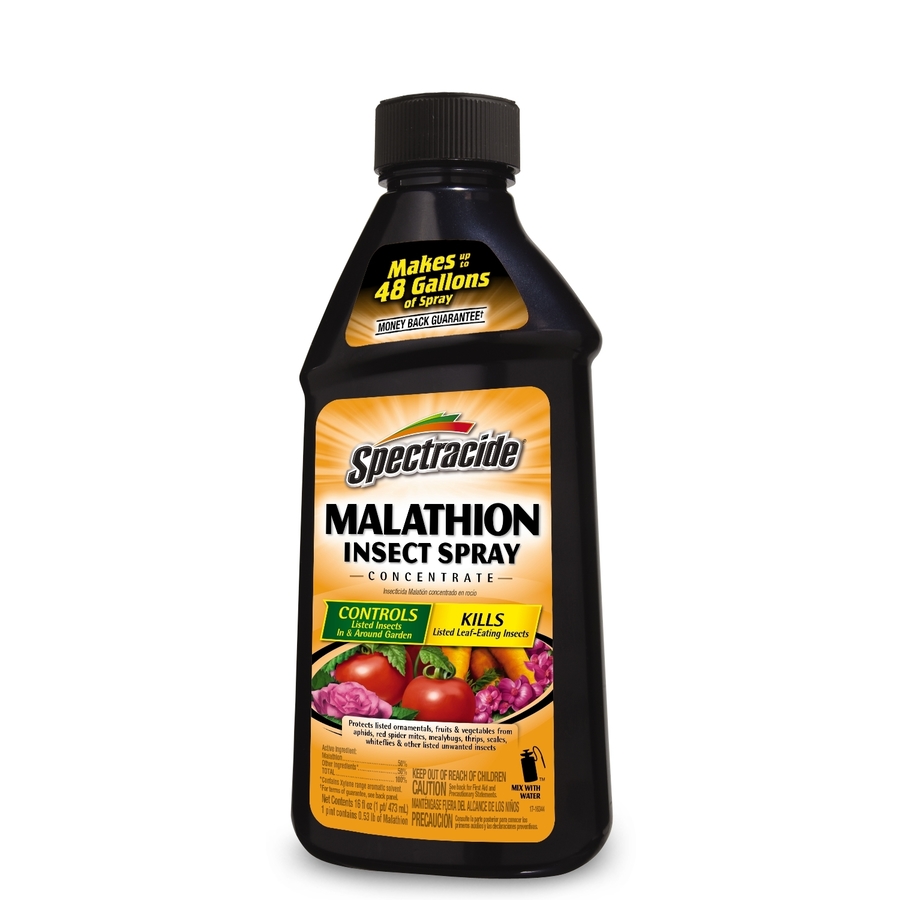
You can use insecticidal soap and water combo with some success, but a product called Malathion will knock them out. You can find it at Lowes or any place that sells garden products. Treat a second time one week after first treatment. Do not treat if bees are present.

Bees will avoid the treated plant until the aroma subsides. You will see what I mean when you open the bottle. It stinks.

You will want to treat during the early morning or evening to avoid treating during the hot part of the day. FYI

 
You can use insecticidal soap and water combo with some success, but a product called Malathion will knock them out. You can find it at Lowes or any place that sells garden products. Treat a second time one week after first treatment. Do not treat if bees are present.

Bees will avoid the treated plant until the aroma subsides. You will see what I mean when you open the bottle. It stinks.

You will want to treat during the early morning or evening to avoid treating during the hot part of the day. FYI
Much appreciated, I will look for that product.

 
Lots of brands make Malathion. Ortho, Fertilome (Hi Yield), Spectracide. They're all about the same. Here's what you're looking for:

071121109002.jpg


Last edited by a moderator:
And that works better than Neem oil? Tried the Neem product and it didn't seem to do much.

 
Back
Top Bottom