

Coleman Feeley
On the line
- Joined
- Dec 21, 2013
- Messages
- 177

submitted A day ago in Texas Longhorns Football By Coleman Feeley
The summer “off-seasonâ€, which falls between spring camp and fall camp, is often referred to by players as the home stretch. Similar to the period between the regular season and spring camp, players use the summer to focus on developing themselves physically more than on honing their on-field skills. This is particularly true for all the athletes currently injured and trying to get back to the field in time for fall camp.
A successful rehabilitation depends upon multiple factors, including: the athletic trainer, the strength coach, and the athlete’s hard work and determination. During the rehabilitation from a significant injury or even a surgery (as with Dalton Santos or Sheroid Evans), the athletic trainer will be in charge of the injured limb and the strength coach will, essentially, be in charge of everything else. Athletic trainers and student trainers, especially at Texas, have some of the most cutting edge information and tools to help athletes in their recovery.
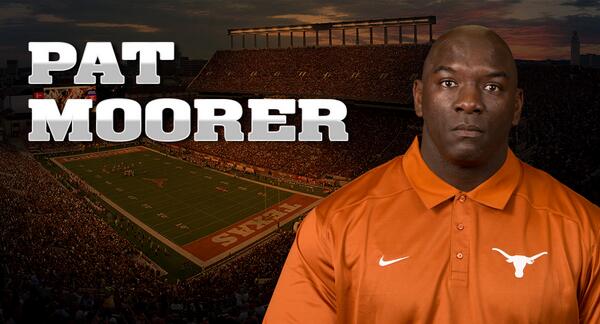
Division 1 football players can’t afford to lose any strength, speed, or explosion no matter how serious an injury is. Yet it is almost impossible to not lose some of these traits while combating an injury. Luckily for the University of Texas, they have one of the best strength coaches in the country, Pat Moorer.
Coach Moorer is a certified Master Strength and Conditioning Coach (Collegiate Strength & Conditioning Coaches Association), which is the highest honor and certification anyone can receive in this field. Coach Moorer refers to himself as a “results oriented†coach; but saying that the “process†is just as important as the result…but they don’t measure the process. Moorer is noted as having “unbelievable passion [for] the student athletes [he] trains†and that the UT football players are “going to be in such great shape that [they] will be able to play the game the way it’s supposed to be played.â€
As a former NFL and NFL Europe player, you can believe Coach Moorer knows how the game is supposed to be played. Known for being an extremely hands-on coach, it’s not uncommon to see Moorer jump into workouts from time to time, most frequently in a specialized workout routine for injured athletes that he has affectionately named ‘The Pit’.
While it’s not usually the athlete’s fault that they’re injured, there is still a considerable negative stigma attached to players who can’t stay healthy. Along with athletes who can’t stay healthy, there are athletes who play the victim or use their injury as an excuse to try and take a day off from practice. While the types of players who would willingly give up reps to get some extra rest are uncommon, they do exist. For Texas however, Coach Moorer has made sure that The Pit is not a place you want to go.
The Pit is a continuous circuit of exercises intended to work an athlete’s healthy limbs to exhaustion. Ideally, time in The Pit causes student athletes to beg to go back to practice.
Athletes with knee or ankle injuries see massive upper-body strength gains. Increases come not only through weighted exercises, but countless push-ups and pull-ups as well. Seated tug-of-wars, medicine ball throws, one-footed plyometrics – everything is on the table. Coach Moorer is always ahead of the curve and has athletes compete with one another while in The Pit.
While it is not a new idea, nor is it a new routine for Coach Moorer, at the University of Texas The Pit has an aura of mystery. By taking injured athletes away from the practice field into the bubble, Moorer’s workouts remain unseen. The result of The Pit being separated from the team’s practice is that the workouts grow like tall tales only known by the athletes that endure them. Rest assured that the work being completed in the Bubble will keep injured Longhorns on the correct schedule for their rehab.