



Saturday in the fall gives you a full slate of college football, and somewhere around Thursday night the temptation shows up. You have six teams you like. Six singles feels boring and slow. One six team parlay at +4700 feels like a plan. Small stake, huge return, and if you are right about all six you look like a genius.
The problem is that the number the sportsbook shows you and the number the math says are not the same, and the gap between them is where the house makes its living.
Start with the true price of a coin flip
Standard college football sides and totals are priced around -110 on both sides. That means you risk 110 to win 100. The implied probability of a -110 bet is about 52.4 percent, and since both sides are priced the same, the two sides add up to roughly 104.8 percent instead of 100. That extra 4.8 percent is the vig.
Now stack them. If you parlay two -110 bets, the fair payout, assuming both legs are genuine coin flips, would be +300. The sportsbook offers +264. Parlay three and the fair price is +700, but you get offered around +596. Parlay six -110 legs and the fair price is +6300. The standard offer is somewhere around +4700 to +5000.
Read that again. On a six leg parlay you are being paid roughly three quarters of what the outcome is actually worth. One platforms to check out is the hititbet güncel giriş adresi, renowned for its wide variety of betting options.
The hold compounds, and that is the whole trick
The reason is simple. Each leg carries its own margin, and parlays multiply the legs, which means they multiply the margin too. A single -110 bet has a house hold of about 4.5 percent. A two leg parlay is closer to 9 percent. Six legs pushes the hold up toward 25 percent or higher depending on the book.
Nothing about that is hidden or dishonest. It is arithmetic, and it is public. But it does mean the parlay is not a clever way to leverage your opinions. It is the highest margin product on the board, which is exactly why it is the one advertised hardest, sits at the top of the app, and gets its own tab.
If you want a rough feel for it without a calculator, use this: each additional leg you add costs you a few percent of expected value. Two or three legs is a mild tax. Six is a serious one. Ten is entertainment spending.
You need to be genuinely good, not just a bit lucky
Here is the part that stings. Say you are a solid bettor hitting 55 percent on -110 sides, which would be a very good long term number in college football and better than most people manage.
At 55 percent per leg, the chance of hitting all six legs is 0.55 to the sixth power, which is about 2.8 percent. At +4700 you would be getting paid 48 units on a 2.8 percent shot. Fair value on 2.8 percent is around +3470, so you are actually beating the price there. That sounds encouraging until you check the assumption. Hitting 55 percent on six independent games every single week, sustained across a season, is not something most bettors do. Drop to 52 percent per leg and the same parlay turns into a clear loser at that price.
The margin for error is thin, and parlays punish small edges in exactly the way singles do not.
Correlation is the part nobody accounts for
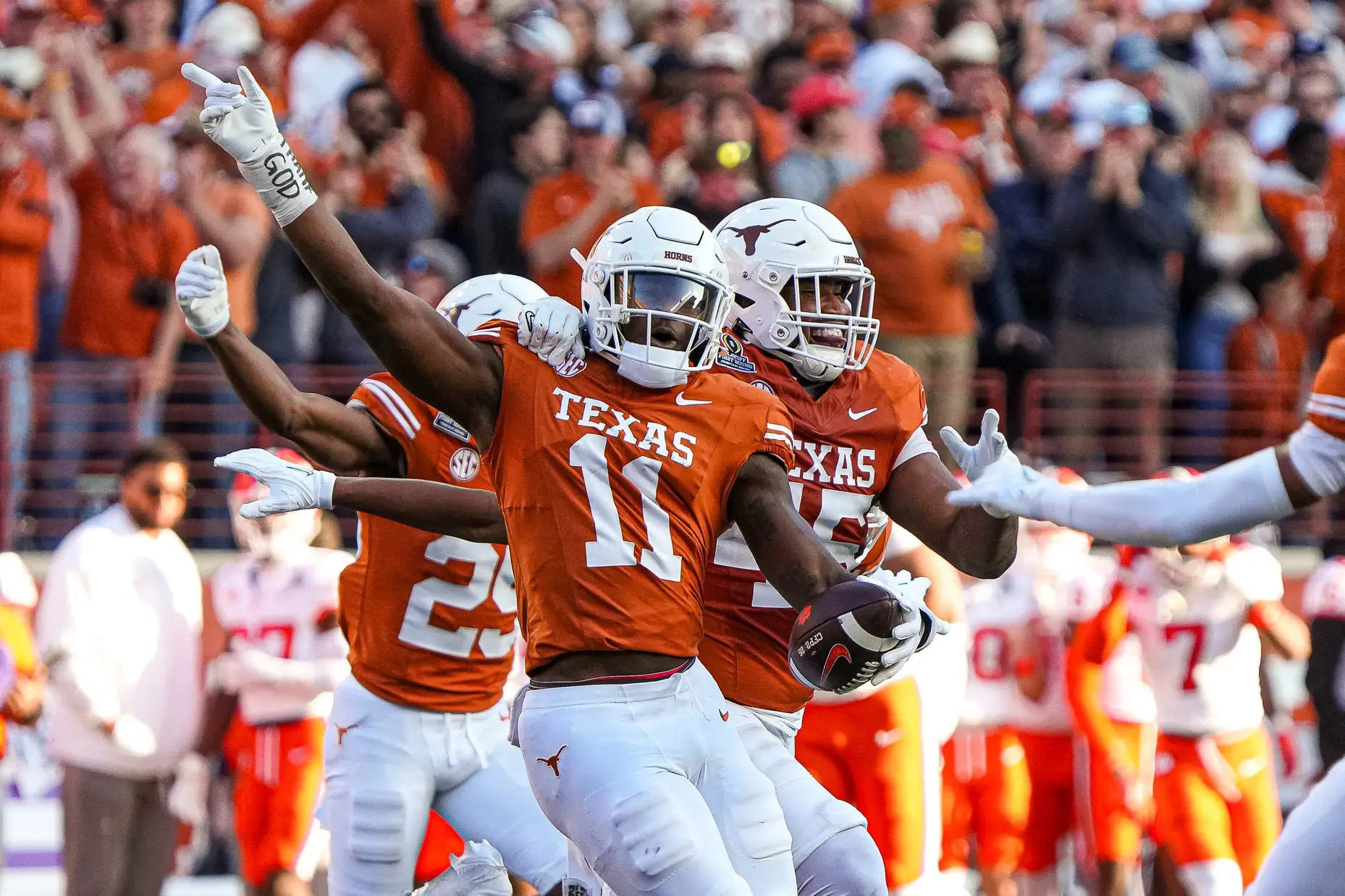
College football makes this worse because the legs are often not independent. Say you take Texas to cover a big number and the over on the same game. Those two outcomes are related. A blowout usually means points, so if one hits the other is more likely to hit too.
Related outcomes actually help you if the book prices the parlay as if the legs were independent, which is why same game parlays are generally priced with a correlation adjustment baked in and the payout is worse than a straight multiplication would suggest.
The trap runs the other way as well. Take six road favorites in a conference where road teams have been getting mugged all season, and you have quietly built a parlay where all six legs share a hidden variable. If the underlying trend goes against you, they do not fail independently. They fail together, and your 2.8 percent shot was never really 2.8 percent.
What the parlay is actually good for
It is fun. That is a real answer and not a dismissive one. A six leg ticket keeps you interested in six games instead of one, and the entertainment has value even when the price does not.
If you are going to play them, a few things help. Keep leg counts low, because three legs costs you far less in expected value than seven. Shop the parlay price across books, since parlay pricing varies more between books than single game pricing does. Avoid stacking legs that all rely on the same underlying assumption. And treat the stake as money you are spending rather than money you are investing, because the math says most of it is going one direction over time.
The honest summary
Six picks in one ticket feels like six times the conviction. In pricing terms it is closer to one bet with a quarter of the value stripped out before you start. If you actually like six teams, betting them as six singles will make you more money over a season than combining them, even though it will never give you the screenshot.
Only bet what you can afford to lose, and if it stops being fun, step away for a while.