
primal defense
Veteran
- Joined
- Nov 4, 2013
- Messages
- 6,997
Bloody Tuesday doesn't have the same ring as Taco Tuesday.
The counterpoints to Texas HC Tom Herman’s ‘Bloody Tuesdays’
[SIZE=inherit]88[/SIZE]
Oklahoma State head coach Mike Gundy thinks less physical may be better in practice. So does the Ivy League.
By [SIZE=inherit]Wescott Eberts[/SIZE][SIZE=inherit]@SBN_Wescott[/SIZE] [SIZE=inherit] [/SIZE]Jan 18, 2017, 3:48pm CST
[SIZE=inherit]
/cdn.vox-cdn.com/uploads/chorus_image/image/52810773/usa_today_9775389.0.jpg) [/SIZE]Soobum Im-USA TODAY Sports
[/SIZE]Soobum Im-USA TODAY Sports
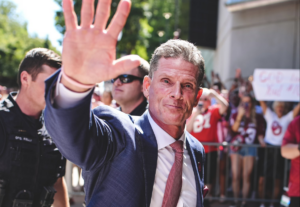
When new Texas Longhorns head coach Tom Herman coached for the Houston Cougars, one of his staples was intensely physical practices known as “Bloody Tuesdays.”
“Our coaches throw the hardest stuff they can throw at them on a Tuesday and put them in the toughest positions on a Tuesday,” Houston head coach Tom Herman said. “We want to see them go really hard, play really physical, really fast and then we’ve got four days to correct the assignments.”
As the name suggests, those practices don’t happen in shells at half speed — full contact, full pads, full speed.
Herman believes that those practices help establish the team’s identity. Given his record against top opponents, it’s difficult to completely argue against those practices as helping instill the physicality that was a defining feature of those two Cougars teams.
“Our goal is, train harder and more physical than any program in the country,” Herman told ESPN last fall. “We like to think that we practice so hard that the games are easy."
However, it’s not the only way to go about things.
In Stillwater, Cowboys head coach Mike Gundy has been moving in an opposite direction — taking it easier on his players in an effort to keep them fresh.
Instead of using the allocated 20 hours of practice time per week, Gundy limits Oklahoma State players to practices that last no longer than an hour and 45 minutes with limited hitting and no swearing by the coaches. Meetings last no longer than 40 minutes.
“There’s only so many hits in their bodies, their heads, their necks, their shoulders,” Gundy said at the AFCA convention last week.
Likewise, Gundy’s research indicated that limited attention spans keep long meetings from having a high level of effectiveness.
The changes were instituted recently by the longtime Oklahoma State coach — prior to last season’s loss to Ole Miss in the Sugar Bowl, Gundy pushed his team hard in practice in an effort to gain an edge in what he anticipated would be a physical game.
The approach didn’t work, as the Cowboys got pounded in the running game by the Rebels and lost by 28 points.
Gundy worried about the new approach in the lead up to playing Colorado in the Alamo Bowl this season, but it worked, perhaps helping to impact the 28-8 win that featured a reversal of the run-game trends from the Sugar Bowl.
Throughout the season, Gundy said that the team suffered from fewer injuries and was able to come back from deficits more often.
“It has to be fun,” Gundy said. “If it’s not fun for them, if their shoulders are hurting, if they’re worn out from fatigue, they’re not going to play hard.”
On the other hand, Herman’s teams at Houston suffered from significant injury issues, especially along the offensive line, perhaps contributing to late-season losses, including to UConn in 2015 and a regular season-ending loss to Memphis in 2016, in addition to two October losses following non-conference games against Oklahoma and Cincinnati.
In the Ivy League, the conference outlawed full-contact hitting in regular-season practices last spring, following in the steps of Dartmouth coach Buddy Teevens, who hadn’t allowed tackling in practice for the previous five seasons.
Teevens, who has coached at major programs in the past, like Florida under Steve Spurrier, came to his conclusions after noticing that concussions tended to happen the most frequently during the spring and preseason camp and learned that Jeff Fisher’s St. Louis Rams didn’t tackle in the preseason.
The reduction of tackling raises questions about the ability to foster the culture of toughness that Herman is seeking through his Bloody Tuesdays. However, Teevens doesn’t believe that the reduction has an impact on the team’s toughness.
“My attitude is you won’t make a guy get tougher with hitting at practice,” he told CBSSports.com. “I think you can improve his tackling technique and assignment. I have guys that have become very capable tacklers who are not the toughest guys on the football team. Why? They practice it a lot more.”
Moreover, injuries, concussions, and missed tackles decreased at Dartmouth, with only two concussions during the 2015 season. By comparison, Houston players suffered six concussions during the 2016 preseason camp alone.
"It's like beating your head against a wall for two and a half hours,” middle linebacker Matt Adams said of Houston’s practices.
That might explain the concussions, though Herman is quick to argue that he isn’t a “heathen butcher” putting his players through a “meatgrinder.”
One reason for Dartmouth’s ability to survive the lack of live tackling in practice may have been the use of a “mobile virtual player” for tackling drills in addition to the usual stationary pads. That way, Teevens said, the Big Green actually tackle more than many other programs, it just isn’t players tackling each other.
And the change didn’t just result in reduced injuries — the 2015 season saw Dartmouth win the Ivy League crown for the first time in nearly two decades as the defense led the FCS in scoring and yards per play.
So there are are now at least two programs that have found success with this approach, which also considers the long-term consequences of human brains suffering so much impact.
Of course, Herman won’t apologize for the way that he coaches.
"I don't know that it has to [be the only way], but it's the one proven way so far,” he said last fall.
In terms of winning championships, he might be correct, but Gundy and Teevens are proving that there is another way to win, one that might even increase the odds of doing so by reducing injuries.
https://www.burntorangenation.com/2017/1/18/14312986/tom-herman-bloody-tuesdays-texas-longhorns-mike-gundy-practice
The counterpoints to Texas HC Tom Herman’s ‘Bloody Tuesdays’
[SIZE=inherit]88[/SIZE]
Oklahoma State head coach Mike Gundy thinks less physical may be better in practice. So does the Ivy League.
By [SIZE=inherit]Wescott Eberts[/SIZE][SIZE=inherit]@SBN_Wescott[/SIZE] [SIZE=inherit] [/SIZE]Jan 18, 2017, 3:48pm CST
[SIZE=inherit]
When new Texas Longhorns head coach Tom Herman coached for the Houston Cougars, one of his staples was intensely physical practices known as “Bloody Tuesdays.”
“Our coaches throw the hardest stuff they can throw at them on a Tuesday and put them in the toughest positions on a Tuesday,” Houston head coach Tom Herman said. “We want to see them go really hard, play really physical, really fast and then we’ve got four days to correct the assignments.”
As the name suggests, those practices don’t happen in shells at half speed — full contact, full pads, full speed.
Herman believes that those practices help establish the team’s identity. Given his record against top opponents, it’s difficult to completely argue against those practices as helping instill the physicality that was a defining feature of those two Cougars teams.
“Our goal is, train harder and more physical than any program in the country,” Herman told ESPN last fall. “We like to think that we practice so hard that the games are easy."
However, it’s not the only way to go about things.
In Stillwater, Cowboys head coach Mike Gundy has been moving in an opposite direction — taking it easier on his players in an effort to keep them fresh.
Instead of using the allocated 20 hours of practice time per week, Gundy limits Oklahoma State players to practices that last no longer than an hour and 45 minutes with limited hitting and no swearing by the coaches. Meetings last no longer than 40 minutes.
“There’s only so many hits in their bodies, their heads, their necks, their shoulders,” Gundy said at the AFCA convention last week.
Likewise, Gundy’s research indicated that limited attention spans keep long meetings from having a high level of effectiveness.
The changes were instituted recently by the longtime Oklahoma State coach — prior to last season’s loss to Ole Miss in the Sugar Bowl, Gundy pushed his team hard in practice in an effort to gain an edge in what he anticipated would be a physical game.
The approach didn’t work, as the Cowboys got pounded in the running game by the Rebels and lost by 28 points.
Gundy worried about the new approach in the lead up to playing Colorado in the Alamo Bowl this season, but it worked, perhaps helping to impact the 28-8 win that featured a reversal of the run-game trends from the Sugar Bowl.
Throughout the season, Gundy said that the team suffered from fewer injuries and was able to come back from deficits more often.
“It has to be fun,” Gundy said. “If it’s not fun for them, if their shoulders are hurting, if they’re worn out from fatigue, they’re not going to play hard.”
On the other hand, Herman’s teams at Houston suffered from significant injury issues, especially along the offensive line, perhaps contributing to late-season losses, including to UConn in 2015 and a regular season-ending loss to Memphis in 2016, in addition to two October losses following non-conference games against Oklahoma and Cincinnati.
In the Ivy League, the conference outlawed full-contact hitting in regular-season practices last spring, following in the steps of Dartmouth coach Buddy Teevens, who hadn’t allowed tackling in practice for the previous five seasons.
Teevens, who has coached at major programs in the past, like Florida under Steve Spurrier, came to his conclusions after noticing that concussions tended to happen the most frequently during the spring and preseason camp and learned that Jeff Fisher’s St. Louis Rams didn’t tackle in the preseason.
The reduction of tackling raises questions about the ability to foster the culture of toughness that Herman is seeking through his Bloody Tuesdays. However, Teevens doesn’t believe that the reduction has an impact on the team’s toughness.
“My attitude is you won’t make a guy get tougher with hitting at practice,” he told CBSSports.com. “I think you can improve his tackling technique and assignment. I have guys that have become very capable tacklers who are not the toughest guys on the football team. Why? They practice it a lot more.”
Moreover, injuries, concussions, and missed tackles decreased at Dartmouth, with only two concussions during the 2015 season. By comparison, Houston players suffered six concussions during the 2016 preseason camp alone.
"It's like beating your head against a wall for two and a half hours,” middle linebacker Matt Adams said of Houston’s practices.
That might explain the concussions, though Herman is quick to argue that he isn’t a “heathen butcher” putting his players through a “meatgrinder.”
One reason for Dartmouth’s ability to survive the lack of live tackling in practice may have been the use of a “mobile virtual player” for tackling drills in addition to the usual stationary pads. That way, Teevens said, the Big Green actually tackle more than many other programs, it just isn’t players tackling each other.
And the change didn’t just result in reduced injuries — the 2015 season saw Dartmouth win the Ivy League crown for the first time in nearly two decades as the defense led the FCS in scoring and yards per play.
So there are are now at least two programs that have found success with this approach, which also considers the long-term consequences of human brains suffering so much impact.
Of course, Herman won’t apologize for the way that he coaches.
"I don't know that it has to [be the only way], but it's the one proven way so far,” he said last fall.
In terms of winning championships, he might be correct, but Gundy and Teevens are proving that there is another way to win, one that might even increase the odds of doing so by reducing injuries.
https://www.burntorangenation.com/2017/1/18/14312986/tom-herman-bloody-tuesdays-texas-longhorns-mike-gundy-practice