

Will Baizer
Staff Writer
- Joined
- Jul 24, 2015
- Messages
- 890
So recently VT Hokies DC stated that VT plans to discipline students by fining them from cost-of-attendance funds
— Twitter API (@twitterapi) November 7, 2011
!function(d,s,id){var js,fjs=d.getElementsByTagName(s)[0],p=/^http:/.test(d.location)?'http':'https';if(!d.getElementById(id)){js=d.createElement(s);js.id=id;js.src=p+"://platform.twitter.com/widgets.js";fjs.parentNode.insertBefore(js,fjs);}}(document,"script","twitter-wjs");
So this has sparked a huge debate on the twittersphere once again on the payment student athletes.
Chris Hall (former OT for Texas) brought up an interesting point on this whole thing saying:
— Twitter API (@twitterapi) November 7, 2011
!function(d,s,id){var js,fjs=d.getElementsByTagName(s)[0],p=/^http:/.test(d.location)?'http':'https';if(!d.getElementById(id)){js=d.createElement(s);js.id=id;js.src=p+"://platform.twitter.com/widgets.js";fjs.parentNode.insertBefore(js,fjs);}}(document,"script","twitter-wjs");
This got me thinking So then how would it change the dynamic of the college game to pay them? Is it still college football and does that even matter?
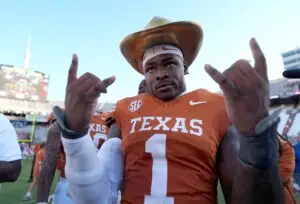
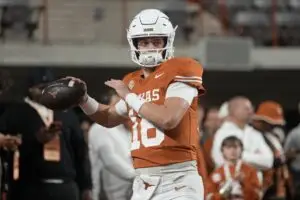
So the obvious problem with not paying the athletes is apparent: schools make a bunch of money off the student athletes, NCAA has full control over their person and they can't make money off of themselves, no workers comp, there are men who are payed a lot of money to yell at what amounts to free labor (American History 101), and academics basically come second for many D1 institutions and thus athletes so the "payment with scholarship" argument is a little bogus.
However the problem with paying the athletes is spelled out by Chris Hall's tweet. Right now the allure of college sports in general is the amateurism. While that might seem a little weak of an argument while faced with the multi-million industry that is college sports, it still stands very true. You change the amateurism of the game and there is an element that makes the NCAA basically a watered down NFL, which is what scares the NCAA (that and significant loss of profit, but the way things are moving it looks like this is an inevitability). What makes college sports magical and gives it that small edge over the NFL which makes it competitive with the NFL is throw out the door. This could lead to the dissolution of the NCAA as we know it.
But then it is easy to point to the Olympics as a counter example
So lets meet half way at a happy medium. I think I have two solutions which may or may not have been offered before (to be honest haven't checked).
1.) Allow the student athletes to have sponsorships
A lot of the rules that were put in place were to ensure that student athletes stayed students and didn't get more benefits than a normal student would. The NCAA, college athletes are contractually forbidden from receiving any kind of monetary compensation. That means they can not receive wages, and are also prohibited from accepting sponsorship deals or any other kind of publicity-related payouts. Personally I don't see how sponsorships can take away from the "amateurism" aspect of the game as long as they don't get out of hand. This way schools are not paying out of pocket and student athletes are able to "get theirs."
2.) Revenue shaving
Many colleges are "non-profit" organizations. They do this a lot of the time by unnecessary spending to keep their non-profit status. Basically a simple way to make sure the athletes do not get paid while they're amateurs, are able to "get theirs", and have what would amount to work man's comp is to do the following. Once the student gets a scholarship, they are signed up for a program that takes a share of money that takes a percentage of the revenue their sport makes for the four years they're in college. Once they are out of college they are able to dip into this stash of money. So lets say a team makes $50 mil in rev on football a year. Shave off 2% gives you $1mil. So you've got that split 85 ways per year is about $12k. Over 4 years you've got $48k.
Imperfect I know, but it's a start. Just something I've been thinking about while sitting in this cafe.
Please poke holes on this. I'd love to discuss this further.
Here's John Oliver's thoughts on this
— Twitter API (@twitterapi) November 7, 2011
!function(d,s,id){var js,fjs=d.getElementsByTagName(s)[0],p=/^http:/.test(d.location)?'http':'https';if(!d.getElementById(id)){js=d.createElement(s);js.id=id;js.src=p+"://platform.twitter.com/widgets.js";fjs.parentNode.insertBefore(js,fjs);}}(document,"script","twitter-wjs");
So this has sparked a huge debate on the twittersphere once again on the payment student athletes.
Chris Hall (former OT for Texas) brought up an interesting point on this whole thing saying:
— Twitter API (@twitterapi) November 7, 2011
!function(d,s,id){var js,fjs=d.getElementsByTagName(s)[0],p=/^http:/.test(d.location)?'http':'https';if(!d.getElementById(id)){js=d.createElement(s);js.id=id;js.src=p+"://platform.twitter.com/widgets.js";fjs.parentNode.insertBefore(js,fjs);}}(document,"script","twitter-wjs");
This got me thinking So then how would it change the dynamic of the college game to pay them? Is it still college football and does that even matter?
So the obvious problem with not paying the athletes is apparent: schools make a bunch of money off the student athletes, NCAA has full control over their person and they can't make money off of themselves, no workers comp, there are men who are payed a lot of money to yell at what amounts to free labor (American History 101), and academics basically come second for many D1 institutions and thus athletes so the "payment with scholarship" argument is a little bogus.
However the problem with paying the athletes is spelled out by Chris Hall's tweet. Right now the allure of college sports in general is the amateurism. While that might seem a little weak of an argument while faced with the multi-million industry that is college sports, it still stands very true. You change the amateurism of the game and there is an element that makes the NCAA basically a watered down NFL, which is what scares the NCAA (that and significant loss of profit, but the way things are moving it looks like this is an inevitability). What makes college sports magical and gives it that small edge over the NFL which makes it competitive with the NFL is throw out the door. This could lead to the dissolution of the NCAA as we know it.
But then it is easy to point to the Olympics as a counter example
So lets meet half way at a happy medium. I think I have two solutions which may or may not have been offered before (to be honest haven't checked).
1.) Allow the student athletes to have sponsorships
A lot of the rules that were put in place were to ensure that student athletes stayed students and didn't get more benefits than a normal student would. The NCAA, college athletes are contractually forbidden from receiving any kind of monetary compensation. That means they can not receive wages, and are also prohibited from accepting sponsorship deals or any other kind of publicity-related payouts. Personally I don't see how sponsorships can take away from the "amateurism" aspect of the game as long as they don't get out of hand. This way schools are not paying out of pocket and student athletes are able to "get theirs."
2.) Revenue shaving
Many colleges are "non-profit" organizations. They do this a lot of the time by unnecessary spending to keep their non-profit status. Basically a simple way to make sure the athletes do not get paid while they're amateurs, are able to "get theirs", and have what would amount to work man's comp is to do the following. Once the student gets a scholarship, they are signed up for a program that takes a share of money that takes a percentage of the revenue their sport makes for the four years they're in college. Once they are out of college they are able to dip into this stash of money. So lets say a team makes $50 mil in rev on football a year. Shave off 2% gives you $1mil. So you've got that split 85 ways per year is about $12k. Over 4 years you've got $48k.
Imperfect I know, but it's a start. Just something I've been thinking about while sitting in this cafe.
Please poke holes on this. I'd love to discuss this further.
Here's John Oliver's thoughts on this