Shaka Smart Waited For This Chance At Texas
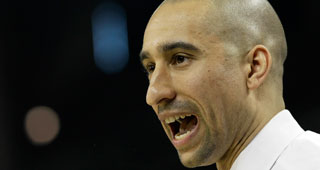
For several years, it looked like Shaka Smart would never leave VCU. In the years following his team’s unlikely run from the First Four to the Final Four in 2011, Smart had become the most sought-after head coach in the country. His name popped up in the rumor mill every time a big job in one of the major conferences opened up and every single time he turned them down. From Marquette to Illinois, NC State and Tennessee, Smart walked away from good programs that offered him millions of dollars and seemed like the next logical step in his coaching career. He even turned UCLA.
A lot of it was the roots he had put down at VCU, where Smart was as beloved a figure as an NCAA coach could be in this era of basketball. While it seemed unlikely he would ever win a national title in a school so far off the national radar, Smart had everything he needed to consistently win at a high level in Richmond. What people forget is that the school’s basketball tradition didn’t start with their high-profile young coach. Smart didn’t build that program - he was just carrying the baton passed to him by Anthony Grant and Jeff Capel.
In four seasons at VCU from 2002-2006, Capel won an average of 20 games. In three seasons from 2007-2009, Grant won an average of 25. The most famous team from their runs came in Grant’s first season in 2007, when a group lead by Eric Maynor and Larry Sanders knocked Duke out in the first round of the NCAA Tournament. When Capel left for Oklahoma and Grant left for Alabama, they looked like two of the hottest young coaches in the business.
In the world of college basketball, though, it doesn’t take long for the worm to turn. Capel was fired after five seasons at OU and is now an assistant coach at Duke. Grant was just fired after six seasons in Alabama. A coach can only be as good as the situation in front of him and you can bet that Smart was taking notes on the fate of his two predecessors at VCU. The biggest difference for both guys is they had gone from the biggest fish in a small pond to a medium sized fish in an ocean.
VCU is almost a perfect situation for an aspiring young coach. It’s a massive public school with an enrollment of over 30,000 located in the heart of one of the best recruiting hotbeds of the country - Northern Virginia and the metropolitan areas of Washington DC and Baltimore. It has the profile of a high-major job while competing against a bunch of small private schools in non-traditional markets up and down the East Coast. VCU was in the Colonial Athletic Association until 2011 when they jumped to the Atlantic 10 - the head coach at VCU has so many more advantages over the head coach at a school like Davidson that it’s hard to even know where to begin.
Any coach with the ability to recruit and an elementary grasp of tactics can do very well at VCU. The school has a basketball culture that puts young coaches in the position to succeed - it’s an East Coast version of Butler, which produced Barry Collier, Thad Matta, Todd Lickliter and Brad Stevens and Xavier, which produced Pete Gillen, Skip Prosser, Thad Matta (who had the rare double dip at both schools) and Sean Miller. If there’s any lesson you can learn from the fates of all those coaches it’s that you don’t want to leave for the first available job that is open.
Capel had some success at OU, including a 30-win season that ended in the Elite Eight in 2010. However, a huge portion of that success came as a result of happenstance - he had the older brother of Blake Griffin on his roster when he came to Norman. Once the Griffin boys left, Capel was forced to go outside the state and recruit in Texas. He wound up having to build a program around two of the bigger head cases from the Texas basketball scene - Willie Warren and Tommy Mason-Griffin - and when those two players predictably imploded he didn’t have enough of a talent base to keep his program above water.
When he first got to Alabama, Grant seemed like he had things going in the right direction as well. He went from 17 wins in his first season to 25 in his second and he took the school to the NCAA Tournament in his third. He wasn’t able to sustain the program’s recruiting momentum, though, as Alabama slipped not just below Kentucky and Florida but also Arkansas (Mike Anderson), LSU (Johnny Jones), Tennessee (Cuonzo Martin) and even Texas A&M (Billy Kennedy). SEC basketball is kill or be killed and you have to be a great coach to succeed at a place like Alabama over a bunch of schools with the same amount of tradition, the same amount of resources and the same exposure to the recruiting hotbeds in the South.
None of this is to say that Smart is likely to face the same fate as Capel and Grant now that he has left VCU, only that most NCAA basketball games are won and lost before the ball is ever tipped into play. What Smart realized was there was no reason to leave the premier job in his conference unless he could get a premier job in one of the bigger conferences. That’s the difference between Texas, Oklahoma and Alabama. In theory, a lot of coaches should be able to win big at Texas. Rick Barnes did.
While Barnes is the most decorated coach in Texas basketball history, a good portion of his success has to be credited with being at the right place at the right time. When Barnes took over in 1997, he was able to benefit from the first generation of kids in Houston and Dallas who had grown up watching NBA basketball as well as the explosion of AAU basketball in what had been a traditionally football-oriented state. The amount of elite players you can recruit from the big cities in Texas alone is staggering. In his time in Austin, Barnes was able to coach guys local products like TJ Ford, Daniel Ewing, Daniel Gibson, LaMarcus Aldridge and DJ Augustin and then complement that with national and international pipelines that included Kevin Durant, PJ Tucker, Avery Bradley, Jordan Hamilton and Tristan Thompson.
For as much hype as the Big 12 has received in basketball in recent years, Kansas is so far ahead of the rest of the conference that Bill Self has won 11 straight conference titles. The Longhorns are the only program in the conference with the resources to keep up. In that sense,
the inability of Rick Barnes to get the most out of his players is one of the biggest reasons for Self’s historic run in Lawrence. The other schools in the conference don’t have the same access to talent and the ones that come close are locked into fairly mediocre in-game coaches like Scott Drew (Baylor) and Travis Ford (Oklahoma State).
Smart can hit the ground running in Austin. If Isaiah Taylor decides to return to school, Texas should be the most talented team in the Big 12. Kansas is almost certainly losing Kelly Oubre and Cliff Alexander and the rest of the conference was exposed in this year’s NCAA Tournament. Iowa State, for as good a job as Fred Hoiberg has done, doesn’t have the size or athleticism that is on the Texas roster while OU has a coach (Lon Kruger) who has given up on recruiting the top prospects in Texas.
The biggest question Smart will have is how much he wants to adjust his trademark HAVOC style of full-court pressure to suit a roster with three 6’9+ NBA prospects - Cameron Ridley, Connor Lammert and Prince Ibeh - who would be more comfortable in a halfcourt setting. Of course, if the biggest problem you have as a first-year coach is how all NBA-caliber talent at your new school fits with your scheme, you are doing pretty well in the grand scheme of things. Barnes left behind a pretty full cupboard. Even if Taylor leaves, Texas still has two experienced guards in Javan Felix and Kendal Yancy who can handle a huge role in the offense from Day 1.
If Smart can rebuild some of the bridges to the Dallas and Houston AAU scenes that were burned by Barnes, who has never been known as the cuddliest coach in the business, he could have an overwhelming athletic advantage on just about every team in the conference. As a coach, if you are going to run a full-court press, that’s exactly the scenario you want. Forget what Malcolm Gladwell said about the press and underdogs. As a rule, playing more possessions favors the more talented team.
That’s what Smart found out in this year’s NCAA Tournament, when VCU lost a first-round OT game to Ohio State. For as well put together as his team was, the Rams had no answer for D’Angelo Russell, a Top 5 pick who went off for 28 points on 20 shots. The real question for Smart is what happens when guys like Russell are on his roster. That’s why he waited so long for the Texas job to come open. Win big at Texas and the only thing left to do is follow Brad Stevens to the NBA. At only 37 years old, it’s all on the table for Shaka Smart
http://basketball.realgm.com/article/237337/Shaka-Smart-Waited-For-This-Chance-At-Texas