


Sirhornsalot
**The Official Horn Sports Landscaper and Landscap
- Joined
- Nov 6, 2013
- Messages
- 33,751
April Brings on the Planting Season!
The month of April is one of my favorite months of the year. FINALLY our growing season is full gear and we’re out there plunging our hands into the soil once again. I am at my happiest when on my knees, making a garden look nice.
For those of you who enjoy planting annual flowers each spring, the floor is yours this month!
When we speak of “annual flowers” we’re talking about flowering plants that bloom in a mostly ongoing fashion throughout the summer, but do not survive our winters and must be replanted each spring. This type would include such flowers as Begonias, Petunias, Perriwinkles, Wave Petunias, Impatiens and Black Foot Daisies.
Let’s take a look at each of these flowers as we start making decisions about what we want flowering in our landscape this season.

Begonias – Begonias are a small flowering plant with big, waxy leaves and numerous small flowers that are impactful when planted in numbers. There are varieties with white, pink and red flowers that you see for the most part in our North Texas nurseries. But there are other varieties that include almost every color there is. Several varieties can do well in partial shade.
Note – if you’re looking for a flowering plant that can withstand and last through our North Texas summers, the Begonia is a solid choice.
Plant in soft, airy soil that is all organic matter. Begonias like to dry out between waterings.

Petunias – One of the more striking flowers in the Spring are Petunias. They came in a variety of colors and feature blooms that are larger and more spectacular than most. They do well in early spring in Texas. However, they will eventually succumb to the heat here and putter out by July. So if you love creating a gorgeous Spring look, these are definitely a good choice. But they likely won’t last the summer.
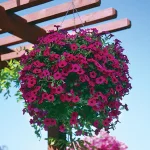
Wave Petunias – This is a variety of Petunia that you will often see sold in hanging baskets. This is because they have a creeping growth habit, with strands that grow out from the center, creating a dramatic effect in hanging baskets and also when planted in gardens. Their flowers are only slightly smaller than regular Petunias and they come in a variety of colors. Unlike regular Petunias, these will last the whole season if properly cared for.

Perriwinkles (Vinca Minor) – One of my favorites because they are relentless bloomers. You can dead-head these but you really don’t need to. They are prolific bloomers and tough enough to make it through an entire Texas summer. They come in a wide array of colors. They can get a little tall, up to 12 inches. So if preferable, they can be cut back.
Impatiens – Impatiens are a beautiful annual flower that comes in a variety of colors. They are more succulent than other annual flowers and do not like to stay wet for long. Only in the best conditions and care do they last a whole summer here, but they are impactful from spring through early summer. One variety, New Guinea Impatiens, grows well in shade.

Caladiums – Caladiums are technically not flowers, but they are used quite effectively in spring gardens because of their large, colorful leaves. They are a bulb plant, in the Elephant Ear family, and there are a number of varieties to choose from with a crazy assortment of colors. Some are best planted in full sun, some varieties best planted in shade or filtered sun. So they can be used in those difficult to manage shaded beds. They can be planted as bulbs in late winter or are sold as small plants in early spring.

Black Foot Daisies – I love this plant/flower. Lots of bang for the buck with these. You may buy a 1-gallon specimen and think you bought a small flowering plant. But in no time at all this plant will triple in size and flower display. Their flowers are white and numerous. They spread wide and are champions in the Texas heat. Make sure these are allowed to dry out between waterings. They do not like to stay wet. Further south, these are perennial but normally do not make it through our North Texas winters.

Coleus – Another plant that does not flower, but is used often in our gardens for its colorful foliage. In this case, strikingly colorful. Coleus is a succulent plant and must be handled carefully. Most varieties are used in shady locations as they cannot withstand full sun conditions. But there are a couple of varieties that do okay in full sun.
Make sure that you choose an all-organic matter planting mix, mixing in compost as well. Make sure your flowers are planted in an elevated way (a few inches higher) so that they can drain after waterings.
First Fertilization of the season
April is here so the weather is now warm enough that we can apply our first fertilization of the year. You will want to get this done in the first part of the month.
I cannot stress this enough – MAKE SURE the product you buy is created for the lawn turf you have. Putting down the wrong product can potentially have disastrous results.
For example, a weed/feed designed for Bermuda turf will have a higher rate of nitrogen and if used on a Zoysia or St Augustine lawn, will burn it up. The “weed” chemical part of that equation would also cause damage to Zoysia and St Augustine turf.
So before you purchase, read the labeling carefully and make sure the product is made for the turf that you have. Before you apply, read the back label for instruction on how to set your spreader for the product. This is largely dictated by the size of the pellet it will cast. So if your product is not listed, go by another product with a similar granule size.
When you apply, make sure you do not cast into landscape beds as lawn fertilizer will damage landscape plants. If your application caused fertilizer pellets to get on the concrete areas of your property, take a blower and blow it back into the lawn. Fertilizer can stain concrete.
Immediately after you apply, water the product in deeply for two consecutive days.
Time for mulch!
Now that the trees are in the latter stages of emerging for spring, it is safe to start mulching again. Mulch helps our beds retain moisture and gives an awesome look overall. I recommend using a shredded mulch with a consistent shredded size. These tend to lock together and float less.
When mulching trees, do NOT apply mulch up next to the trunk. A tree’s root flare should always be exposed.
Always apply at least three inches of mulch. And keep an eye on your home’s foundation line. You need to be able to see at least three inches of foundation. If your past mulching has crept up above that mark, then this may be the time to remove all that past mulch before applying new mulch. This is important as you don’t want water to be able to come into your home through the weep holes. And, if you sell your home, this sort of thing will get flagged during inspection.
The month of April is one of my favorite months of the year. FINALLY our growing season is full gear and we’re out there plunging our hands into the soil once again. I am at my happiest when on my knees, making a garden look nice.
For those of you who enjoy planting annual flowers each spring, the floor is yours this month!
When we speak of “annual flowers” we’re talking about flowering plants that bloom in a mostly ongoing fashion throughout the summer, but do not survive our winters and must be replanted each spring. This type would include such flowers as Begonias, Petunias, Perriwinkles, Wave Petunias, Impatiens and Black Foot Daisies.
Let’s take a look at each of these flowers as we start making decisions about what we want flowering in our landscape this season.
Begonias – Begonias are a small flowering plant with big, waxy leaves and numerous small flowers that are impactful when planted in numbers. There are varieties with white, pink and red flowers that you see for the most part in our North Texas nurseries. But there are other varieties that include almost every color there is. Several varieties can do well in partial shade.
Note – if you’re looking for a flowering plant that can withstand and last through our North Texas summers, the Begonia is a solid choice.
Plant in soft, airy soil that is all organic matter. Begonias like to dry out between waterings.
Petunias – One of the more striking flowers in the Spring are Petunias. They came in a variety of colors and feature blooms that are larger and more spectacular than most. They do well in early spring in Texas. However, they will eventually succumb to the heat here and putter out by July. So if you love creating a gorgeous Spring look, these are definitely a good choice. But they likely won’t last the summer.
Wave Petunias – This is a variety of Petunia that you will often see sold in hanging baskets. This is because they have a creeping growth habit, with strands that grow out from the center, creating a dramatic effect in hanging baskets and also when planted in gardens. Their flowers are only slightly smaller than regular Petunias and they come in a variety of colors. Unlike regular Petunias, these will last the whole season if properly cared for.
Perriwinkles (Vinca Minor) – One of my favorites because they are relentless bloomers. You can dead-head these but you really don’t need to. They are prolific bloomers and tough enough to make it through an entire Texas summer. They come in a wide array of colors. They can get a little tall, up to 12 inches. So if preferable, they can be cut back.
Impatiens – Impatiens are a beautiful annual flower that comes in a variety of colors. They are more succulent than other annual flowers and do not like to stay wet for long. Only in the best conditions and care do they last a whole summer here, but they are impactful from spring through early summer. One variety, New Guinea Impatiens, grows well in shade.
Caladiums – Caladiums are technically not flowers, but they are used quite effectively in spring gardens because of their large, colorful leaves. They are a bulb plant, in the Elephant Ear family, and there are a number of varieties to choose from with a crazy assortment of colors. Some are best planted in full sun, some varieties best planted in shade or filtered sun. So they can be used in those difficult to manage shaded beds. They can be planted as bulbs in late winter or are sold as small plants in early spring.
Black Foot Daisies – I love this plant/flower. Lots of bang for the buck with these. You may buy a 1-gallon specimen and think you bought a small flowering plant. But in no time at all this plant will triple in size and flower display. Their flowers are white and numerous. They spread wide and are champions in the Texas heat. Make sure these are allowed to dry out between waterings. They do not like to stay wet. Further south, these are perennial but normally do not make it through our North Texas winters.
Coleus – Another plant that does not flower, but is used often in our gardens for its colorful foliage. In this case, strikingly colorful. Coleus is a succulent plant and must be handled carefully. Most varieties are used in shady locations as they cannot withstand full sun conditions. But there are a couple of varieties that do okay in full sun.
Make sure that you choose an all-organic matter planting mix, mixing in compost as well. Make sure your flowers are planted in an elevated way (a few inches higher) so that they can drain after waterings.
First Fertilization of the season
April is here so the weather is now warm enough that we can apply our first fertilization of the year. You will want to get this done in the first part of the month.
I cannot stress this enough – MAKE SURE the product you buy is created for the lawn turf you have. Putting down the wrong product can potentially have disastrous results.
For example, a weed/feed designed for Bermuda turf will have a higher rate of nitrogen and if used on a Zoysia or St Augustine lawn, will burn it up. The “weed” chemical part of that equation would also cause damage to Zoysia and St Augustine turf.
So before you purchase, read the labeling carefully and make sure the product is made for the turf that you have. Before you apply, read the back label for instruction on how to set your spreader for the product. This is largely dictated by the size of the pellet it will cast. So if your product is not listed, go by another product with a similar granule size.
When you apply, make sure you do not cast into landscape beds as lawn fertilizer will damage landscape plants. If your application caused fertilizer pellets to get on the concrete areas of your property, take a blower and blow it back into the lawn. Fertilizer can stain concrete.
Immediately after you apply, water the product in deeply for two consecutive days.
Time for mulch!
Now that the trees are in the latter stages of emerging for spring, it is safe to start mulching again. Mulch helps our beds retain moisture and gives an awesome look overall. I recommend using a shredded mulch with a consistent shredded size. These tend to lock together and float less.
When mulching trees, do NOT apply mulch up next to the trunk. A tree’s root flare should always be exposed.
Always apply at least three inches of mulch. And keep an eye on your home’s foundation line. You need to be able to see at least three inches of foundation. If your past mulching has crept up above that mark, then this may be the time to remove all that past mulch before applying new mulch. This is important as you don’t want water to be able to come into your home through the weep holes. And, if you sell your home, this sort of thing will get flagged during inspection.