


Sirhornsalot
**The Official Horn Sports Landscaper and Landscap
- Joined
- Nov 6, 2013
- Messages
- 34,602

A Pittisporum hedge, probably 20 years old, dying from the winter storm.
March Sadness – Winter storm leaves us reeling into March
We all know the unfortunate effects of the recent, historical winter storm. It was devastating in many ways. Homes were flooded. Electricity was lost for days. We’ve heard about most of this unfortunate news for the past week.
But there was another crisis happening at the same time and we’re not hearing much about it yet – but we will. That’s the devastation left behind in our landscapes.
Why was this winter event so destructive to our landscapes? We’ve had winter storms before and made it through just fine.
This storm was historical. It carried with it record low temperatures that frankly, have never happened in my life time here in North Texas. It brought the most unusual “powder snow” and there was no ice at all. All of this was foreign to most of Texas, and the plants that call this state home.
The low temperatures were one thing. We dipped down to –2 where I live. But the killing blow was the length of time we spent at those incredibly low temperatures. We went three days in the teens, single digits. Wind chills were well below zero.
Some of our landscape plants simply can’t survive that kind of weather.
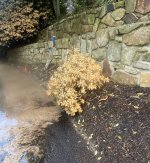
Another casualty.
Our native Live Oaks, for example, are a story yet to unfold yet here in North Texas. North of DFW is the northern boundary for Live Oaks. And right now, they are in a sad state.
Normally, this is the time when the famous “Live Oak Molt” begins. This is when tree begins browning and shedding its leaves while growing new ones at the same time. The tree is never really without leaves. The leaf dump takes about three weeks to complete.
This season will be much different. The existing leaves on the Live Oaks have been damaged by the winter weather. They will drop due to damage, not due to the molt. So we may Live Oaks without leaves, perhaps for a few weeks, which is a site we almost never see in our lifetimes.
The sad news is, not all of the Live Oaks will survive. There will be fatalities. So sad to see this happen. But we likely won’t know until mid-to-late March whether any given tree is a survivor or not. So please don’t remove your Live Oaks until you’re sure they aren’t coming back. You should at least see buds appearing in the next few weeks.
All we can do is wait and see.
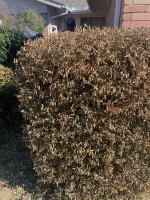
A Lorapetalum, dead after the devastating cold.
Other plants hard hit
Another landscape plant that was hard hit was the Lorapetalum (aka Chinese Fringe plant) shrub. In one week of damage assessments in North Texas, I can say I have seen only a handful of Lorapetalums that have survived. The rest were dead.
Pittisporum shrubs and Variegated Pittisporums were also hard hit. I’d say around 85% of the ones I examined this week were dead. The problem with the others is that they were damaged and have lots of brown leaves (freeze burn) on them. These leaves will drop and the plant may look awkward for some time going forward.
Indian Hawthorns, Sunshine Ligustrum, even Japanese Yews all suffered some damage but in most cases will survive.
With Palms, it will be a wait and see thing. But for now, I advise you to remove every leaf/limb that is brown. Even if that is every one of them. With Sago Palms, remove the brown fronds. Cut a half inch from the coconut center. Keep an eye on the top of that center because that is where new growth will begin. If that dries hard or becomes mush, it’s dead. But that won’t be known until weeks from now.
On the other hand, plants that have sailed right through this include most all species of Hollies, Pines, Junipers, Boxwoods and most all deciduous shrubs and trees.
With perennials, we likely won’t know the extent of that damage until late March. They are in dormancy and more or less look dead anyway this time of year. So for now, I would cut them back and hope for the best.
So we’ll be faced with some choices in the next month. Are we willing to nurse something back to health when it may never look like it’s supposed to? Or do we replace it? These decisions will not be easy.
This weather was so extreme that none of the recommendations I make for preparing your landscape would make a difference. Covering shrubs and whatnot can’t stop damage from zero or near-zero temperatures that linger for 2-3 days. So this was a pretty helpless feeling throughout this storm.
I’ve been asked to put a dollar amount on the damage inflicted on landscapes in DFW and that would be a hard call. I’d say easily into the millions. Landscape-wise, this was a tragic event.
An Old Texas Wives’ Tale . . .
According to a popular Old Texas Wives’ Tale, when it snows and stays on the ground for three days, it will snow again before the season is over.
The snow from the recent storms certainly stayed on the ground for three days. And throughout my life, I have found this saying to ring true for the most part. I have no idea if there’s something to it or just coincidence.
However, this time, the rule has to apply to most of Texas, which received snow and saw it stay three days. So it would be hard to imagine another widespread event like that repeating itself, even without the harsh temperatures.
And this leads me to our next subject . . . .
Don’t Be Too Early . . .
Every March, I see folks buying up fertilizer, weed & feeds, spring flowers, etc. And in doing this, they are making a big mistake.
For both applying fertilizer/weed & feeds or planting flowers, wait until April 1 or after to do so. Historically, April 1 is when we see our last freeze or winter weather. We have seen snow here on April 1.
Applying fertilizer during cold weather when your turf hasn’t fully emerged from dormancy is a big waste of time and product. Turf that isn’t actively growing (but is still green), is not intaking much in the way of nutrients. To get maximum effect from your fertilizer, wait until April 1 or after to put it down. We’ll see some sunny, warm days in March so don’t let yourself be tempted!
Spring flowers represent an investment for us. Lets face it, they aren’t cheap. So it would be highly discouraging to spend that money only to see them lost in a late season freeze. It’s best to be patient and wait until it’s safe, in April.
One last item . . .
It would be very wise to have your sprinkler system checked for breaks, leaks, issues that could have been caused by the recent storm, before we head into the growing season.